
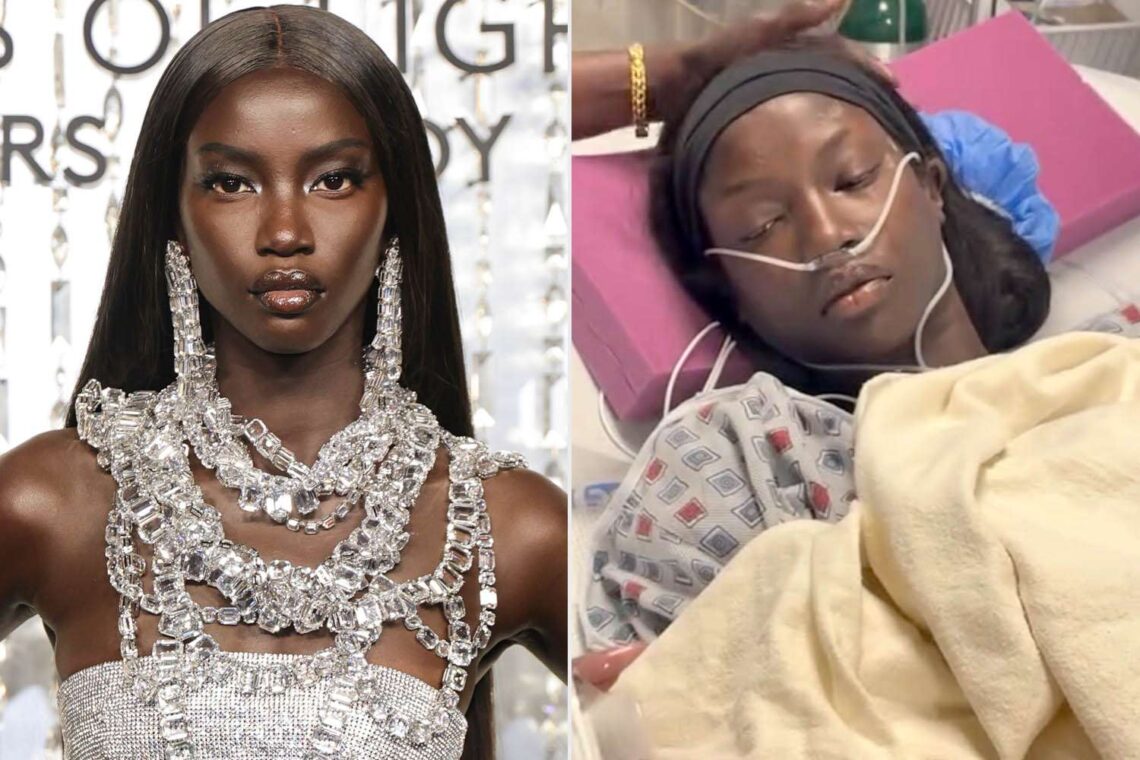
Breaking: Supermodel Anok Yai, 28, reveals harrowing health battle after emergency lung surgery and sepsis scare. The Model of the Year 2025 winner is now recovering after doctors discovered a congenital defect that put her life at risk.
Anok Yai, the 28-year-old supermodel who made history as the second Black model to open a Prada show and recently won Model of the Year at the Fashion Awards 2025, has shared a deeply personal and frightening medical journey with her fans. In mid-December 2025, what started as a lingering cough escalated into a life-threatening condition that required emergency robotic lung surgery at NYU Langone Health.
The fashion icon’s silent battle with a congenital disability she never knew existed culminated in a terrifying diagnosis of sepsis following the minimally invasive surgery. Today, Anok Yai is recovering and in stable condition, crediting her surgical team and expressing profound gratitude for surviving what could have been a fatal medical emergency.
Table of Contents
The Silent Battle: How Anok Yai’s Symptoms Began
The supermodel’s health scare began with what seemed like an ordinary respiratory issue—a persistent cough that wouldn’t go away. For weeks, Anok Yai experienced symptoms that progressively worsened, transforming from a simple cough into something far more sinister. According to her emotional Instagram post, the 28-year-old fashion icon began experiencing severe chest pains that made everyday activities increasingly difficult.
“I had been dealing with a lingering cough for weeks,” Anok Yai revealed in her candid social media update. “Then I started having chest pains. Eventually, I was coughing up blood and struggling to breathe.” These alarming symptoms indicated that something was seriously wrong with her respiratory system, prompting immediate medical intervention.
The progression of symptoms followed a classic pattern of respiratory distress that medical professionals recognize as warning signs requiring urgent attention. The coughing up blood, medically known as hemoptysis, combined with difficulty breathing and chest pain, pointed to a serious underlying condition affecting her lungs. For someone as active and physically fit as Anok Yai, who regularly walks major fashion runways including the Prada show and maintains a demanding modeling schedule, these symptoms significantly impacted her quality of life and ability to work.
What makes this health battle particularly concerning is that Anok Yai had no previous knowledge of any congenital defect. The supermodel had lived her entire life without realizing she was born with a lung abnormality that was silently affecting her health. This congenital disability remained undetected until the symptoms became severe enough to warrant comprehensive medical testing and imaging.
Discovering the Congenital Defect: A Hidden Health Threat

Medical professionals at NYU Langone Health discovered that Anok Yai had been living with a congenital lung defect—a condition present from birth that had gone undiagnosed for 28 years. This type of congenital disability can involve abnormal lung tissue, malformed airways, or structural abnormalities that affect how the lungs function and process oxygen.
Congenital lung defects vary widely in severity and presentation. Some individuals live their entire lives without symptoms, while others experience progressive respiratory issues as they age. In Anok Yai’s case, the defect had reached a critical point where diseased tissue in her lung was causing her heart to overwork, attempting to compensate for compromised lung function.
“My heart was overworking because of this defect,” the supermodel explained in her Instagram post, highlighting how interconnected our vital organs truly are. When lung tissue becomes diseased or fails to function properly, the cardiovascular system bears the burden, forcing the heart to pump harder to deliver adequate oxygen throughout the body. This condition creates a dangerous cycle that can lead to both pulmonary and cardiac complications if left untreated.
The discovery of this congenital defect required sophisticated diagnostic imaging and thoracic surgery evaluation. Dr. Robert Cerfolio, the renowned thoracic surgeon who would ultimately perform Anok Yai’s lung surgery, likely utilized advanced CT scans, MRI imaging, and pulmonary function tests to assess the extent of the abnormality and determine the best surgical approach.
For the Model of the Year winner, this diagnosis must have been shocking. Despite her youth, fitness level, and active career that demands peak physical performance, Anok Yai had been unknowingly living with a ticking time bomb in her chest. The timing of this health scare—coming just weeks after her triumphant Fashion Awards 2025 victory—underscores how suddenly life can change, regardless of external success or apparent health.
The Emergency Decision: Choosing Life-Saving Surgery
Faced with the reality of her congenital lung defect and worsening symptoms, Anok Yai and her medical team at NYU Langone Health made the critical decision to proceed with emergency lung surgery. This wasn’t an elective procedure that could be postponed—the 28-year-old supermodel’s condition had deteriorated to the point where surgical intervention became a life-saving necessity.
“I decided to have surgery to remove the diseased part of my lung,” Anok Yai stated, describing the moment when she chose to prioritize her health over her thriving fashion career. This decision required immense courage, as any thoracic surgery carries inherent risks, and the recovery process would temporarily sideline her from the runways and photoshoots that had defined her recent success.
The urgency of the situation cannot be overstated. When patients present with hemoptysis (coughing up blood), severe chest pain, and breathing difficulties, thoracic surgeons must act quickly to prevent further deterioration. The diseased lung tissue was not only compromising Anok Yai’s respiratory function but also placing dangerous strain on her cardiovascular system. Delaying the procedure could have resulted in complete respiratory failure, cardiac complications, or other life-threatening scenarios.
Dr. Robert Cerfolio, who would lead the surgical team, is a highly respected thoracic surgeon with extensive experience in complex lung procedures. His expertise in robotic and minimally invasive surgery techniques made him the ideal choice for Anok Yai’s delicate procedure. The decision to use robotic lung surgery technology would prove crucial in minimizing trauma to surrounding tissue while precisely removing the diseased portion of her lung.
For someone in the public eye like Anok Yai, the decision to undergo such a serious medical procedure also meant revealing vulnerability to millions of followers and fans worldwide. The fashion community had celebrated her meteoric rise from a college student discovered at a Washington, D.C. homecoming to becoming the Model of the Year. Now, she would share an entirely different kind of story—one of survival, resilience, and the fragility of human health.
The timing of the surgery in mid-December 2025 meant Anok Yai would spend the holiday season in recovery rather than celebrating her recent career achievements. This sacrifice demonstrates her understanding that without addressing this congenital defect immediately, there might not be future Fashion Awards or Prada shows to attend. Health had to take priority over everything else.
Inside the Operating Room: Robotic Lung Surgery Explained

Anok Yai underwent a sophisticated robotic lung surgery, a minimally invasive procedure that represents the cutting edge of thoracic surgery technology. This advanced surgical approach allowed Dr. Robert Cerfolio and his team at NYU Langone Health to remove the diseased lung tissue with precision while minimizing trauma to Anok Yai’s body.
Robotic lung surgery utilizes the da Vinci Surgical System or similar robotic platforms that give surgeons enhanced visualization and control. Unlike traditional open thoracic surgery, which requires large incisions and rib spreading, the minimally invasive surgery approach uses several small incisions through which robotic arms and a high-definition camera are inserted. The surgeon controls these instruments from a console, viewing a magnified 3D image of the surgical field.
The benefits of this minimally invasive surgery technique for patients like Anok Yai are substantial. Smaller incisions mean less pain, reduced blood loss, lower infection risk, shorter hospital stays, and faster recovery times compared to traditional open surgery. For a 28-year-old supermodel whose career depends on physical appearance and stamina, these advantages were particularly valuable. The smaller scars would heal more discreetly, and the reduced recovery time would allow her to return to work sooner.
During the procedure, Dr. Cerfolio carefully navigated the complex anatomy of Anok Yai’s chest cavity, identifying and removing the diseased portion of her lung while preserving as much healthy tissue as possible. The congenital defect had created abnormal tissue that needed complete excision to prevent future complications. This type of lung resection requires meticulous technique to ensure proper sealing of airways and blood vessels, preventing air leaks and hemorrhaging.
The surgery likely took several hours, with Anok Yai under general anesthesia while her surgical team worked with focused precision. Robotic technology allowed Dr. Cerfolio to make movements more refined than human hands alone could achieve, navigating around vital structures like major blood vessels, nerves, and the remaining healthy lung tissue. Every cut, every suture, every sealed vessel brought the supermodel closer to breathing freely again.
NYU Langone Health is recognized as a center of excellence for thoracic surgery, with state-of-the-art facilities and some of the nation’s most experienced surgeons. The institution’s track record with complex lung procedures gave Anok Yai the best possible chance for a successful outcome. The combination of advanced robotic technology, expert surgical skill, and comprehensive perioperative care created an optimal environment for this life-saving procedure.
The initial indications suggested the surgery went well. The diseased lung tissue was successfully removed, and Anok Yai’s remaining lung tissue appeared healthy and viable. The surgical team closed the small incisions, and the supermodel was moved to post-anesthesia recovery, where medical staff would monitor her vital signs closely as she emerged from anesthesia. At this point, everyone involved likely felt cautiously optimistic about her prognosis.
However, the human body doesn’t always follow the expected recovery trajectory, and complications can arise even after the most expertly performed procedures. What happened next would transform Anok Yai’s medical journey from a routine postoperative recovery into a fight for her life.
The Sepsis Scare: When Complications Turned Life-Threatening

In the days following her successful lung surgery, Anok Yai developed sepsis—a life-threatening condition that occurs when the body’s immune system overreacts to an infection, potentially leading to organ failure and death. This postoperative complication transformed her recovery from routine to critical, requiring immediate emergency medical intervention.
“After the surgery, I developed sepsis and was rushed to the hospital for emergency treatment,” Anok Yai revealed in her Instagram post, describing the terrifying turn her health battle took. Sepsis is one of the most feared complications in medicine, capable of rapidly progressing from initial symptoms to complete organ system failure within hours if not aggressively treated.
According to the Sepsis Alliance, sepsis affects more than 1.7 million adults in America each year and kills nearly 270,000 people annually. The condition occurs when chemicals released into the bloodstream to fight infection trigger inflammatory responses throughout the body. This immune system overreaction can cause widespread inflammation, blood clotting in small vessels, and compromised blood flow to vital organs, potentially leading to tissue damage, organ failure, and death.
Postoperative sepsis can develop from various sources following thoracic surgery. Surgical site infections, pneumonia, urinary tract infections, or bloodstream infections can all trigger the septic cascade. In Anok Yai’s case, the exact source wasn’t specified in her public statements, but given the nature of her lung surgery and the respiratory system’s exposure to environmental bacteria, a pulmonary or surgical site infection could have been the initiating factor.
The symptoms of sepsis include fever or hypothermia, rapid heart rate, rapid breathing, confusion, and extreme discomfort or pain. For someone recovering from major surgery like Anok Yai, distinguishing normal postoperative symptoms from the early signs of sepsis requires vigilant medical monitoring and quick recognition by experienced healthcare providers.
When sepsis was identified, Anok Yai was rushed to the hospital for emergency treatment—likely returning to NYU Langone Health where her surgical team could provide continuity of care. Sepsis treatment involves aggressive interventions including broad-spectrum antibiotics, intravenous fluids, vasopressor medications to maintain blood pressure, oxygen support, and close monitoring in an intensive care setting.
The supermodel’s life hung in the balance as medical professionals fought to halt the septic process before it caused irreversible damage to her vital organs. The same heart that had been overworking due to her congenital lung defect now faced additional stress from sepsis-induced inflammation and potential shock. Her recently operated lung, still healing from surgical intervention, had to function adequately despite the systemic infection ravaging her body.
“This was a life-threatening condition,” Anok Yai acknowledged, not mincing words about the severity of her medical emergency. Many patients who develop sepsis don’t survive, particularly when it progresses to severe sepsis or septic shock. The mortality rate for septic shock can exceed 40%, making Anok Yai’s eventual survival a testament to both her physical resilience and the quality of care she received.
The 28-year-old fashion icon spent additional days, possibly weeks, in the hospital battling this life-threatening condition. During this time, she couldn’t attend fashion events, couldn’t work on upcoming campaigns, couldn’t engage with the fashion community that had just honored her as Model of the Year. Instead, she fought a battle that millions of social media followers knew nothing about until she chose to share her story.
The Medical Team: Crediting Life-Saving Doctors
Anok Yai emerged from her health battle with profound gratitude for the medical professionals who saved her life, specifically crediting two physicians whose expertise proved crucial during different stages of her treatment: Dr. Robert Cerfolio at NYU Langone Health and Dr. Harmik Soukiasian at Beverly Hills Concierge Health.
Dr. Robert Cerfolio, the thoracic surgeon who performed Anok Yai’s robotic lung surgery, is one of the most accomplished thoracic surgeons in the United States. As Chief of Thoracic Surgery at NYU Langone Health, Dr. Cerfolio has performed thousands of complex lung procedures and pioneered numerous minimally invasive techniques. His expertise in robotic surgery and lung resections made him the ideal surgeon for Anok Yai’s delicate procedure involving a congenital defect.
“I want to thank Dr. Cerfolio for saving my life,” Anok Yai wrote in her Instagram post, acknowledging the surgeon’s critical role in her survival. Dr. Cerfolio’s precise surgical technique during the initial lung surgery likely minimized complications and preserved maximum lung function for the supermodel. When sepsis developed postoperatively, his continued involvement in her care would have been essential in managing the complex interplay between surgical healing and systemic infection.
Dr. Harmik Soukiasian, affiliated with Beverly Hills Concierge Health, also received Anok Yai’s thanks for his role in her recovery. While the specific nature of Dr. Soukiasian’s involvement wasn’t detailed, concierge medicine physicians typically provide comprehensive, personalized care with extended appointment times and 24/7 availability. His participation may have involved coordinating care, providing ongoing monitoring, or managing aspects of her recovery after the acute hospitalization.
The collaboration between these medical professionals exemplifies modern healthcare at its best—specialists working together, combining their expertise to address a patient’s complex needs. Thoracic surgery, critical care medicine, infectious disease specialists, pulmonologists, and other healthcare providers likely contributed to Anok Yai’s care during her hospitalization and recovery.
The 28-year-old supermodel’s public acknowledgment of her doctors serves an important purpose beyond personal gratitude. By naming and thanking these physicians, she highlights the life-saving work medical professionals do every day and demonstrates the importance of seeking expert care when facing serious health issues. Her platform, with millions of followers, became a megaphone for medical excellence and the value of specialized surgical expertise.
For Dr. Cerfolio and Dr. Soukiasian, treating a high-profile patient like Anok Yai came with unique pressures. The Model of the Year winner’s survival depended on their clinical judgment and technical skill, and any adverse outcome would have been scrutinized publicly. Their successful management of her case reflects years of training, experience, and dedication to patient care.
Support from the Fashion Community and Beyond

News of Anok Yai’s health battle triggered an outpouring of support from the fashion community, fellow models, celebrities, and fans worldwide. When the 28-year-old supermodel shared her medical journey on Instagram, the response demonstrated the deep affection and respect she has earned throughout her career.
Naomi Campbell, the legendary supermodel and longtime mentor to many in the fashion industry, was among those who expressed support for Anok Yai during her recovery. Campbell, who has witnessed generations of models navigate the pressures and challenges of the fashion world, understands the vulnerability of sharing such a personal health scare with the public. Her endorsement and concern carried significant weight within the fashion community.
Angel Reese, the professional basketball player and rising sports icon, also reached out to Anok Yai, showing how the supermodel’s influence extends beyond fashion into broader popular culture. This cross-industry support illustrates how Anok Yai has become a role model for young women across multiple fields, representing excellence, grace, and now, courage in the face of life-threatening illness.
The fashion industry, often criticized for its superficiality and harsh treatment of models, rallied around one of its brightest stars during her darkest moment. Designers, photographers, makeup artists, stylists, and fellow models flooded social media with messages of encouragement and prayers for Anok Yai’s full recovery. This collective response revealed the genuine relationships and community that exist behind the glamorous façade of runway shows and magazine covers.
Fans from around the world shared their own experiences with lung surgery, sepsis, congenital defects, and other serious medical conditions, creating a digital support network for the recovering supermodel. Many expressed gratitude for Anok Yai’s willingness to share her vulnerability and survival, noting how her openness helps destigmatize discussions about health challenges and the fragility of life.
The timing of this health scare, coming just weeks after Anok Yai’s Fashion Awards 2025 triumph where she was named Model of the Year, added poignancy to the situation. She had reached the pinnacle of her profession, receiving recognition as the industry’s top model, only to face a medical emergency that put everything into perspective. Career achievements, runway appearances, and magazine covers suddenly mattered far less than simply surviving and recovering.
This outpouring of support serves another crucial function—it reinforces Anok Yai’s place in the fashion community as she prepares to eventually return to work. Knowing that the industry genuinely cares about her wellbeing, not just her availability for bookings, provides emotional support during the healing process and reassurance that her career will be waiting when she’s ready to resume working.
Anok Yai’s Career: Context Behind the Health Battle
To fully appreciate the impact of this health battle on Anok Yai, understanding her remarkable career trajectory is essential. The 28-year-old supermodel’s rise from obscurity to becoming Model of the Year represents one of the most dramatic success stories in contemporary fashion.
Anok Yai’s discovery reads like a modern fairy tale. In 2017, while attending Howard University’s homecoming in Washington, D.C., photographer Steven Hall spotted the then-college student in the crowd. The images he captured went viral, catching the attention of modeling agencies and launching Anok Yai into the fashion industry seemingly overnight. Her striking features, statuesque height, and natural elegance made her an instant sensation.
Within months of being discovered, Anok Yai made fashion history by becoming only the second Black model to open a Prada show, following in the footsteps of Naomi Campbell who had achieved that milestone decades earlier. This breakthrough moment signaled that Anok Yai wasn’t just another pretty face—she represented a shift in fashion’s approach to diversity and inclusion.
The years following her discovery saw Anok Yai’s career accelerate rapidly. She walked for virtually every major fashion house—Versace, Valentino, Tom Ford, Burberry, Balmain, and countless others. Her face graced the covers of Vogue, Harper’s Bazaar, and other prestigious fashion publications. Brands competed for her participation in campaigns and runway shows, recognizing her ability to generate buzz and embody their luxury aesthetic.
The Fashion Awards 2025 recognition as Model of the Year represented the fashion industry’s formal acknowledgment of Anok Yai’s dominance. This prestigious honor, previously awarded to modeling legends and industry icons, placed her firmly in the upper echelon of her profession. At just 28 years old, she had achieved what many models spend entire careers pursuing.
Then came the lingering cough, the chest pains, and the frightening discovery that would temporarily derail everything. The congenital lung defect she never knew existed forced a complete recalibration of priorities. Runway shows and photoshoots became irrelevant compared to the fundamental need to breathe, to survive, to live.
For someone whose career depends on physical stamina—the ability to work 12-hour photoshoots, walk multiple shows during Fashion Week, travel constantly across time zones, and maintain the energy required by the modeling profession—respiratory problems pose an existential threat. The fact that Anok Yai had been functioning at such a high level while unknowingly dealing with a congenital defect speaks to her remarkable physical resilience.
The lung surgery and subsequent sepsis battle occurred at what should have been a celebratory period in Anok Yai’s career. Instead of capitalizing on her Model of the Year momentum with high-profile bookings and lucrative contracts, she spent weeks fighting for her life in hospital beds. The fashion calendar doesn’t stop for anyone, and missing major fashion weeks or campaign shoots during this period represented significant professional sacrifices.
However, her decision to prioritize health over career demonstrates maturity and wisdom beyond her years. Anok Yai understood that without addressing the life-threatening condition, there would be no future career to protect. She chose survival over bookings, long-term health over short-term opportunities, and in doing so, likely extended her modeling career by many years.
The Recovery Journey: Current Status and Outlook
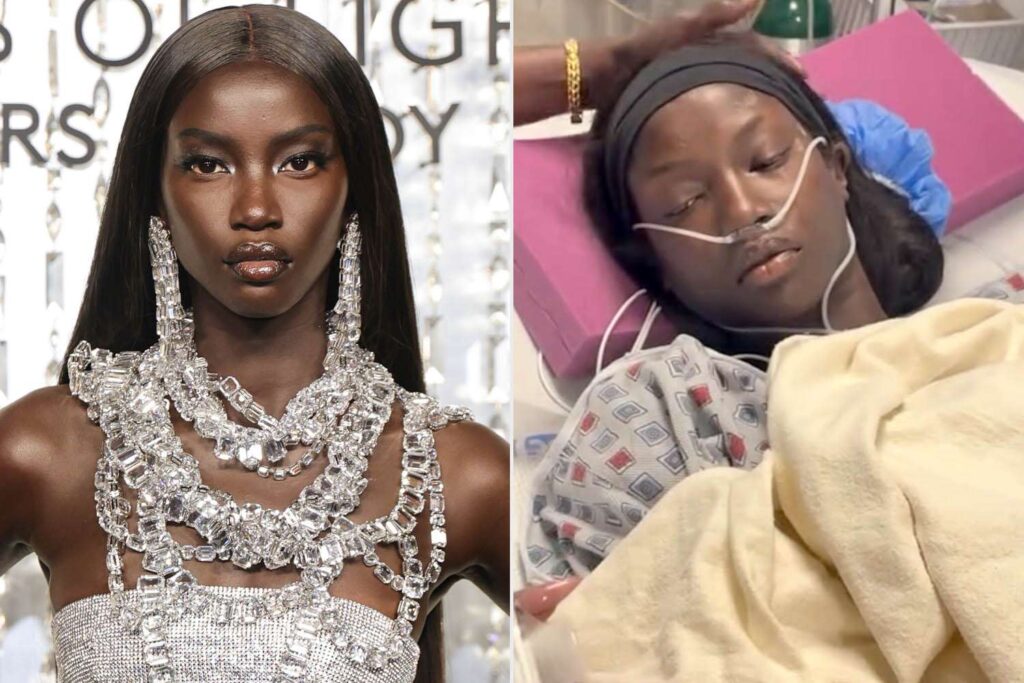
As of January 2026, Anok Yai is recovering and in stable condition, her medical crisis successfully navigated thanks to expert surgical intervention and aggressive sepsis treatment. The 28-year-old supermodel has emerged from her health battle with a renewed appreciation for life and a determination to make a full recovery.
“I’m on the mend and expected to make a full recovery,” Anok Yai shared with her followers, providing the reassuring update that millions had been waiting to hear. This positive prognosis suggests that both the lung surgery and the sepsis treatment were ultimately successful, with no apparent long-term complications threatening her health or career.
The healing process from robotic lung surgery typically takes several weeks to months, depending on the extent of tissue removal and individual patient factors. For Anok Yai, who had a portion of her lung removed, the remaining lung tissue must adapt to handle her respiratory needs. The body is remarkably resilient, and healthy lung tissue can compensate for lost function through a process called compensatory growth and recruitment of previously underutilized air sacs.
Recovery from sepsis adds another layer of complexity to Anok Yai’s healing journey. Sepsis survivors often experience what’s called post-sepsis syndrome, which can include fatigue, reduced physical and mental functioning, difficulty sleeping, and increased vulnerability to infections. Full recovery from sepsis can take months, requiring patience and gradual rehabilitation.
The 28-year-old fashion icon has been candid about the emotional aspects of her recovery, describing how the experience forced her to slow down and reassess priorities. “I think the universe was telling me to slow down,” she reflected in her Instagram post, acknowledging that her demanding career pace may have prevented her from recognizing earlier warning signs of her deteriorating health.
This period of forced rest, while unwelcome, may ultimately prove beneficial for Anok Yai’s long-term wellbeing. The fashion industry’s relentless pace can be physically and mentally exhausting, and few models get the opportunity to step back and recover without career consequences. By being transparent about her health battle, Anok Yai has created space for herself to heal properly without the pressure to return prematurely.
Her medical team, including Dr. Robert Cerfolio and Dr. Harmik Soukiasian, are likely monitoring her recovery closely with follow-up imaging, pulmonary function tests, and regular check-ups to ensure she’s healing as expected. These appointments will track her lung function, check for any signs of infection recurrence, and clear her for gradually increasing physical activity.
The supermodel’s return to work will be gradual and carefully managed. Unlike surgical recovery from cosmetic procedures, recovering from major thoracic surgery and sepsis requires genuine physiological healing that cannot be rushed. Her first photoshoots and runway appearances will need to account for reduced stamina and ongoing healing, with schedules adjusted to prevent overexertion.
Fashion insiders have expressed overwhelming support for giving Anok Yai whatever time she needs to fully recover. The industry recognizes that protecting the health of its Model of the Year serves everyone’s interests, ensuring she can have a long, sustainable career rather than risking further complications by returning too quickly.
Medical Education: Understanding Congenital Lung Defects
Anok Yai’s experience brings attention to congenital lung defects, a category of birth abnormalities that affect lung structure and function. These conditions vary widely in severity and can remain undiagnosed well into adulthood, as demonstrated by the supermodel’s case where her defect went undetected for 28 years.
Congenital lung defects include several specific conditions: congenital cystic adenomatoid malformation (CCAM), bronchopulmonary sequestration, congenital lobar emphysema, and bronchogenic cysts. Each involves abnormal lung tissue development during fetal growth, creating structural problems that can compromise respiratory function and create health risks throughout life.
Many individuals with mild congenital lung defects experience no symptoms and never require treatment. The abnormality remains a incidental finding if imaging is performed for other reasons, or never gets discovered at all. However, when diseased tissue becomes large enough or positioned to impair function, symptoms emerge—exactly what happened with Anok Yai.
The progression of symptoms in Anok Yai’s case—lingering cough, chest pain, hemoptysis (coughing up blood), and breathing difficulty—indicates that her congenital defect had reached a critical stage. The diseased lung tissue was likely causing recurrent infections, bleeding, or mechanical interference with normal breathing. The fact that her heart was overworking suggests the defect was significantly compromising her oxygen exchange capacity.
Diagnosis of congenital lung defects requires imaging studies like chest X-rays, CT scans, or MRI. These tests reveal abnormal tissue patterns, cysts, or malformed lung structures that explain the patient’s symptoms. Once identified, the treatment decision depends on symptom severity, defect size and location, and risk of complications.
For symptomatic congenital lung defects like Anok Yai’s, surgical removal of the abnormal tissue is the definitive treatment. This prevents future complications including recurrent infections, bleeding, potential malignant transformation, and progressive respiratory decline. The minimally invasive surgery approach using robotic technology represents the gold standard for such procedures, offering optimal outcomes with minimal recovery time.
The supermodel’s experience highlights an important message: not all health problems manifest obviously, and even serious conditions can hide behind seemingly minor symptoms. Her lingering cough could have been dismissed as allergies or a persistent cold, but thankfully she sought medical attention that led to proper diagnosis and life-saving treatment.
Understanding Sepsis: The Life-Threatening Complication
Sepsis, the life-threatening complication that Anok Yai developed after her lung surgery, represents one of medicine’s most challenging emergencies. Understanding this condition helps appreciate the severity of the supermodel’s medical crisis and the expertise required to save her life.
According to the Sepsis Alliance and medical authorities, sepsis occurs when the body’s response to infection becomes dysregulated, causing an immune system overreaction that damages its own tissues and organs. Rather than containing the infection locally, the immune response becomes systemic, flooding the bloodstream with inflammatory chemicals that trigger widespread inflammation, blood clotting abnormalities, and impaired blood flow to vital organs.
The progression of sepsis follows a dangerous cascade. It begins with an infection—bacterial, viral, or fungal—somewhere in the body. The immune system detects this threat and mobilizes defensive mechanisms. In sepsis, this response becomes excessive and uncontrolled, causing more harm than the original infection. Blood vessels become leaky, blood pressure drops, organs receive inadequate oxygen and nutrients, and tissue damage accumulates.
If untreated, sepsis progresses to severe sepsis (with organ dysfunction) and potentially septic shock (with dangerously low blood pressure despite fluid resuscitation). The mortality rate escalates with each stage, making early recognition and aggressive treatment absolutely critical. When Anok Yai was rushed to the hospital for emergency treatment, medical professionals were racing against this deadly timeline.
Postoperative sepsis, which occurred in Anok Yai’s case, develops when surgical site infections or other hospital-acquired infections trigger the septic cascade. Despite modern surgical sterility techniques and prophylactic antibiotics, postoperative infections remain a risk for any surgical patient. Thoracic surgery carries particular infection risks because the chest cavity and respiratory system have inherent exposure to environmental bacteria.
Treatment of sepsis requires a multi-pronged approach implemented urgently. Broad-spectrum antibiotics attack the underlying infection while clinicians work to identify the specific pathogen through blood cultures. Intravenous fluids restore blood volume and support blood pressure. Vasopressor medications help maintain adequate blood pressure when fluids alone aren’t sufficient. Oxygen support ensures adequate tissue oxygenation despite compromised circulation.
In severe cases, patients require intensive care unit admission for close monitoring and aggressive support of failing organ systems. Mechanical ventilation might be necessary if respiratory failure develops. Dialysis might be required if kidneys fail. The medical team must constantly adjust treatment based on the patient’s response, laboratory values, and clinical trajectory.
For Anok Yai, surviving sepsis meant her body successfully fought off the infection while medical interventions prevented irreversible organ damage. Her youth, previously good health (aside from the congenital defect), and the expertise of her medical team all contributed to her positive outcome. Many sepsis patients aren’t as fortunate, particularly elderly individuals or those with multiple underlying health conditions.
The 28-year-old supermodel’s willingness to share her sepsis experience serves an important public health function. Sepsis kills hundreds of thousands of Americans annually, yet public awareness remains low. Many people don’t recognize the warning signs or understand the urgency of seeking immediate medical care. By using her platform to discuss this life-threatening condition, Anok Yai helps educate her millions of followers about a medical emergency everyone should understand.
The Psychological Impact of Near-Death Medical Experiences
Beyond the physical recovery, Anok Yai faces the psychological aftermath of her near-death experience—a journey that’s just as important as the physiological healing from lung surgery and sepsis. Confronting mortality at age 28, particularly when living at the height of professional success, creates profound psychological effects that require acknowledgment and processing.
Medical trauma is real and can manifest as post-traumatic stress disorder, anxiety, depression, or persistent fear about health and mortality. The sudden shift from feeling healthy (or at least not knowing about serious illness) to fighting for survival in a hospital creates psychological whiplash that doesn’t resolve simply because the physical danger passes.
For someone like Anok Yai, whose career depends on projecting confidence, beauty, and strength, acknowledging vulnerability represents a significant psychological challenge. The fashion industry doesn’t typically make space for models to be anything other than aspirational images of perfection. By sharing her medical journey, including the frightening details of coughing up blood, struggling to breathe, and battling sepsis, she disrupts this narrative and allows herself to be fully human.
The supermodel’s reflection that “the universe was telling me to slow down” suggests she’s engaging in meaning-making around her health battle. This psychological process—finding purpose or lessons in traumatic experiences—helps survivors integrate difficult events into their life narrative without being defined solely by trauma. For Anok Yai, this might mean reassessing her career pace, setting new boundaries, or shifting priorities toward long-term wellbeing rather than short-term professional gains.
Support systems become crucial during recovery from major medical events. The outpouring of support from Naomi Campbell, Angel Reese, and countless others in the fashion community provides emotional validation and reminds Anok Yai she’s valued beyond her modeling abilities. This social support significantly impacts psychological recovery and resilience.
Medical professionals increasingly recognize that treating the body without addressing the mind leaves recovery incomplete. Many hospitals now integrate mental health professionals into surgical and critical care teams, offering counseling and psychological support to patients recovering from major procedures or life-threatening complications. Whether Anok Yai has accessed such services isn’t publicly known, but addressing the psychological dimensions of her experience will support her overall recovery.
The 28-year-old fashion icon may also experience what psychologists call post-traumatic growth—positive psychological changes that can emerge from struggling with highly challenging life circumstances. Survivors sometimes develop greater appreciation for life, closer relationships, increased personal strength, recognition of new possibilities, or spiritual growth. Her public acknowledgment of needing to slow down suggests this growth process may already be beginning.
Comparing Treatment Approaches: Traditional vs. Minimally Invasive
Anok Yai’s experience with robotic lung surgery highlights the dramatic advances in thoracic surgery over recent decades. Understanding the difference between traditional open surgery and the minimally invasive surgery approach she received illuminates why the surgical technique chosen by Dr. Robert Cerfolio was optimal for her situation.
Traditional open thoracic surgery, called thoracotomy, involves a large incision through the chest wall, often requiring separation or removal of a rib to access the lungs. This approach provides surgeons with direct visualization and manual access to thoracic structures, but comes with significant trauma. Patients face substantial postoperative pain, long recovery periods, large visible scars, and increased risks of complications including pneumonia and prolonged air leaks.
Minimally invasive surgery techniques, including video-assisted thoracoscopic surgery (VATS) and robotic-assisted thoracoscopic surgery (RATS), revolutionized thoracic surgery. These approaches use several small incisions rather than one large opening. Cameras provide magnified, high-definition views of the surgical field, while specialized instruments allow precise manipulation of tissue. Robotic technology further enhances this by providing the surgeon with enhanced dexterity, filtration of hand tremors, and three-dimensional visualization.
For Anok Yai’s congenital defect requiring partial lung resection, the robotic approach offered multiple advantages. Smaller incisions meant less muscle trauma, reduced postoperative pain, and faster recovery. The precision of robotic instruments allowed Dr. Cerfolio to carefully identify and remove only the diseased tissue while preserving maximum healthy lung function. The enhanced visualization helped ensure complete excision of abnormal tissue while avoiding damage to critical structures like blood vessels and bronchi.
The cosmetic benefits of minimally invasive surgery shouldn’t be dismissed as merely aesthetic concerns, particularly for someone whose career involves photoshoots and runway appearances. The smaller scars from robotic surgery heal more discreetly and fade more completely than the large incisions required for open surgery. For a supermodel, this distinction matters professionally.
Recovery time represents another crucial difference. Traditional thoracotomy patients often spend 5-7 days or longer in the hospital and require months for full recovery. Minimally invasive approaches typically allow hospital discharge within 3-5 days, with patients returning to normal activities within weeks rather than months. This faster recovery timeline was essential for Anok Yai, though her sepsis complication extended her hospital stay beyond what would normally be expected.
Despite these advantages, minimally invasive and robotic surgery aren’t appropriate for every patient or every lung condition. Complex cases, extensive disease, or certain anatomical factors might require traditional open approaches. The decision depends on surgical expertise, patient anatomy, and the specific pathology being treated. In Anok Yai’s case, her congenital defect was amenable to robotic resection, and Dr. Cerfolio’s expertise in this technique made it the ideal choice.
The technology’s continued evolution means future patients with similar conditions will benefit from even more refined techniques. However, technology alone doesn’t ensure success—the surgeon’s skill, experience, and judgment remain paramount. Dr. Cerfolio’s thousands of prior thoracic procedures provided the foundation of expertise that made Anok Yai’s robotic lung surgery successful.
The Intersection of Career and Health: Lessons Learned
Anok Yai’s health battle illuminates important lessons about the intersection of demanding careers and personal wellbeing—lessons that extend far beyond the fashion industry to anyone pursuing ambitious professional goals.
The supermodel’s reflection that the universe was forcing her to slow down acknowledges a truth many high-achievers struggle with: success-driven lifestyles often ignore warning signs that something is wrong with our health. The lingering cough she experienced for weeks could have been addressed earlier, but the demands of maintaining her position as Model of the Year likely took priority over investigating a “minor” symptom.
This pattern is particularly pronounced in industries like fashion where physical appearance and perceived strength are valued. Models who show weakness, cancel bookings due to illness, or take time off for health concerns risk being replaced by the countless other beautiful faces competing for the same opportunities. This creates enormous pressure to push through symptoms, ignore pain, and maintain appearances even when seriously unwell.
For Anok Yai, the congenital lung defect she never knew existed might have been symptomatic earlier in ways she dismissed or attributed to other causes. Fatigue after long flights could have been chalked up to jet lag rather than poor oxygenation. Shortness of breath during photoshoots might have seemed like normal exertion rather than respiratory compromise. The chest pains she eventually experienced probably didn’t start suddenly but escalated from milder discomfort she initially ignored.
The fashion industry’s demanding schedule—Fashion Weeks in multiple cities, back-to-back photoshoots, constant travel, late nights, early call times—leaves little room for self-care or medical appointments. When you’re the Model of the Year with bookings scheduled months in advance, canceling to see a doctor about a cough seems professionally irresponsible, even when that cough might be signaling a life-threatening condition.
Anok Yai’s decision to undergo surgery and then publicly share her medical journey represents a paradigm shift in how successful models can navigate health crises. Rather than hiding the situation or returning to work prematurely, she chose transparency and adequate recovery time. Her choice normalizes prioritizing health over career momentum and demonstrates that true professional longevity requires protecting the foundation—your physical wellbeing—that makes work possible.
The outpouring of support she received validates this approach. The fashion community didn’t penalize her for needing surgery or developing sepsis. Designers, photographers, and brands didn’t abandon her during recovery. Instead, they rallied around her, demonstrating that the industry can adapt to accommodate human health needs when someone is honest about their situation.
This experience will likely reshape how Anok Yai approaches her career going forward. The 28-year-old supermodel now understands viscerally that no runway appearance or magazine cover is worth sacrificing her health. She’ll presumably be more attuned to her body’s signals, more willing to seek medical attention for concerning symptoms, and more protective of recovery time when needed.
For the countless young people who look up to Anok Yai as a role model, her transparency about this health battle provides crucial lessons. Success means nothing without health. Listening to your body isn’t weakness but wisdom. Seeking medical care when symptoms arise could save your life. These messages, delivered by someone at the pinnacle of her profession, carry immense weight.
The Role of Advocacy and Awareness
By sharing her experience with lung surgery, sepsis, and congenital defects, Anok Yai has become an inadvertent health advocate, using her platform to raise awareness about conditions many people don’t understand or recognize as serious threats.
Congenital lung defects remain relatively unknown to the general public, with most people unaware that such conditions exist or can remain undiagnosed into adulthood. Anok Yai’s case demonstrates that you can live nearly three decades without knowing about a serious structural abnormality in your body. This revelation might prompt others experiencing unexplained respiratory symptoms to seek comprehensive evaluation rather than dismissing their concerns.
Sepsis awareness is perhaps the most important public health benefit of Anok Yai sharing her story. Despite killing hundreds of thousands annually, sepsis remains poorly understood by most Americans. Many don’t recognize the warning signs or understand that sepsis constitutes a medical emergency requiring immediate hospital care. When a high-profile figure like the Model of the Year reveals she battled this life-threatening condition, it brings valuable attention to sepsis recognition and prevention.
The Sepsis Alliance and other organizations working to combat this condition benefit enormously from celebrity attention. Anok Yai didn’t need to mention sepsis specifically in her Instagram post—she could have simply said “complications” or been vague about what happened after surgery. By naming the condition and describing it as life-threatening, she educated millions of followers who may have never heard of sepsis before.
Her openness about coughing up blood, struggling to breathe, and experiencing chest pains also provides a public service. These symptoms indicate serious medical problems requiring urgent evaluation. When people read about Anok Yai’s experience and recognize similar symptoms in themselves or loved ones, it might prompt them to seek care sooner, potentially catching dangerous conditions before they become critical.
The supermodel’s emphasis on thanking her doctors—specifically naming Dr. Robert Cerfolio and Dr. Harmik Soukiasian—highlights the value of expert medical care. In an era when healthcare is politically contentious and medical professionals sometimes face public criticism, her genuine gratitude reminds people that skilled physicians save lives every day. This positive representation of the medical profession benefits public trust in healthcare.
Anok Yai’s experience also advocates implicitly for access to quality medical care. Her treatment at NYU Langone Health, one of the nation’s premier medical centers, with robotic surgery performed by a renowned thoracic surgeon, represents the highest level of care available. Not everyone has access to such resources, and her story highlights the importance of ensuring advanced medical technology and specialist expertise are available to all patients who need them.
The fashion community’s response to her health battle also sends powerful messages about supporting colleagues through medical crises. In an industry often portrayed as cutthroat and superficial, the genuine concern and support demonstrated toward Anok Yai reveals a more humane side of fashion. This models healthier industry norms where human wellbeing takes precedence over commercial concerns.
Looking Forward: The Future After Recovery
As Anok Yai continues her recovery and looks toward resuming her career, the fashion world eagerly anticipates her return while respecting her need for adequate healing time. The 28-year-old supermodel’s future appears bright, with her Model of the Year status intact and her health improving steadily.
The immediate future involves completing her physical recovery from both the lung surgery and the sepsis treatment. This process likely includes regular follow-up appointments with her medical team, pulmonary function testing to assess her lung capacity, and gradual increases in physical activity as her body heals. Dr. Robert Cerfolio and Dr. Harmik Soukiasian will continue monitoring her progress, ensuring no complications arise and that her remaining lung tissue is functioning optimally.
Anok Yai has mentioned that she expects to make a full recovery, a positive prognosis that bodes well for her return to modeling. With proper healing, her lung function should stabilize at a new baseline that, while operating with less tissue than before, should prove adequate for normal activities including the demands of modeling work. Many people live full, active lives with partial lung resections, and there’s no reason to expect Anok Yai will face permanent limitations.
Her return to the runway will likely be gradual and carefully planned. Rather than immediately jumping back into a full schedule of fashion week shows and photoshoots, she’ll probably ease back into work with less demanding assignments that allow her to gauge her stamina and physical capabilities. This measured approach protects against overexertion while she’s still healing and helps prevent any setbacks that could delay full recovery.
The fashion industry has shown remarkable patience and support during her absence, suggesting that major brands and designers will be eager to work with Anok Yai once she’s ready. Her Model of the Year recognition ensures continued relevance and demand for her participation in major campaigns and runway shows. If anything, her medical journey and survival might increase public interest in her story and work, translating to even greater career opportunities.
Beyond modeling, Anok Yai might choose to use her experience as a platform for health advocacy. Her firsthand knowledge of congenital defects, lung surgery, and sepsis positions her to raise awareness and support organizations working on these health issues. Whether through public speaking, fundraising, or simply continuing to share her recovery journey, she has the potential to impact public health understanding significantly.
The psychological integration of her near-death experience will continue as she moves forward. Surviving such a serious health crisis at age 28 provides perspective that many people don’t gain until much later in life. This maturity might inform how she approaches her career, the types of projects she chooses, and how she balances professional ambition with personal wellbeing.
Her decision to share her medical journey transparently has already redefined how models can discuss health challenges publicly. Rather than maintaining an illusion of perfection, Anok Yai embraced vulnerability and authenticity. This approach may influence how the fashion industry handles models’ health issues going forward, creating space for more honest discussions about the physical and mental health challenges inherent in the profession.
The coming months will reveal how Anok Yai’s experience shapes her long-term career trajectory. Will she continue at the intense pace that characterized her rise to Model of the Year, or will she adopt a more measured approach that prioritizes sustainable success over maximum bookings? Will she use her platform to advocate for health awareness, or focus primarily on her modeling work? These questions will be answered as she completes her recovery and makes choices about her professional future.
Conclusion: A Story of Survival and Resilience
Anok Yai’s journey from lingering cough to life-saving robotic lung surgery and sepsis survival represents a powerful narrative of resilience, medical expertise, and the fragility of human health. The 28-year-old supermodel’s willingness to share her frightening medical emergency with millions of followers has educated the public about congenital lung defects, the dangers of sepsis, and the importance of prioritizing health over career demands.
Her experience discovering a congenital defect she lived with unknowingly for 28 years reminds us that our bodies can harbor serious conditions without obvious symptoms until they reach critical stages. The progression from simple cough to coughing up blood to struggling to breathe illustrates how quickly health can deteriorate when underlying problems exist. Her decision to undergo minimally invasive surgery with Dr. Robert Cerfolio at NYU Langone Health represented a life-saving choice that required courage and trust in medical expertise.
The postoperative sepsis complication that transformed her recovery into a fight for survival underscores how even successful surgeries can lead to life-threatening complications. Anok Yai’s survival through this medical emergency reflects both her physical resilience and the aggressive, expert treatment provided by her medical team. The combination of advanced surgical techniques, immediate recognition and treatment of sepsis, and comprehensive hospital care saved her life.
The fashion community’s response—particularly support from icons like Naomi Campbell and crossover celebrities like Angel Reese—demonstrated genuine care for Anok Yai beyond her value as a model. This outpouring of support provided emotional sustenance during her darkest moments and reinforces her importance to the industry that named her Model of the Year just weeks before her health crisis began.
As Anok Yai continues recovering and prepares to eventually return to her thriving career, her story serves multiple purposes. It educates about rare medical conditions and life-threatening complications. It advocates for prioritizing health over professional demands. It normalizes vulnerability and health struggles even for those who appear to live perfect lives. And it demonstrates the life-saving value of expert medical care and advanced surgical technology.
The supermodel’s reflection that the universe forced her to slow down suggests she’s extracting meaning from her trauma and integrating this experience into a more balanced approach to life and career. Whether this means reducing her workload, being more attuned to her body’s signals, or advocating for health awareness, Anok Yai has gained perspective that will likely shape her decisions going forward.
For the millions of people who follow Anok Yai’s career and now her recovery journey, her transparency provides inspiration and education. Her message is clear: no achievement matters if you don’t survive to enjoy it. Health must always take priority. Listening to your body and seeking medical care when symptoms arise can save your life. And surviving a serious health crisis doesn’t diminish your worth or potential—it demonstrates strength, resilience, and the precious value of life itself.
Anok Yai’s full recovery expected in the coming months will hopefully allow her to return to the runways, photoshoots, and magazine covers where she excels. But whether she continues modeling or not, her legacy now includes more than just her groundbreaking fashion career. She has shown courage in vulnerability, wisdom in prioritizing health, and generosity in sharing her story to help others. The Model of the Year has become a model for resilience, survival, and the importance of valuing life above all else.